

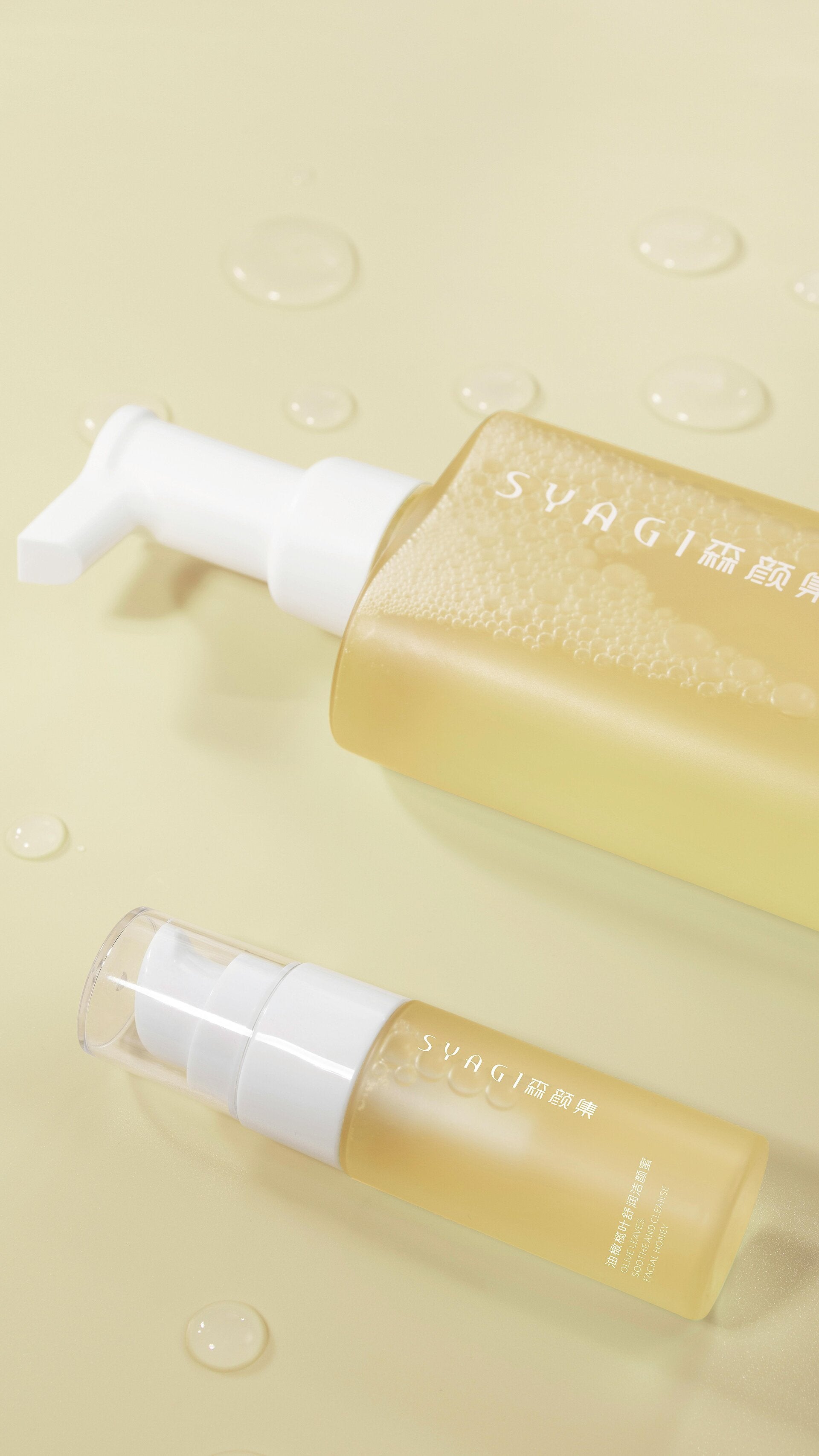
Facial Exfoliating Cleansers: What They Do and How to Use Them/ Guide
A facial exfoliating cleanser combines daily cleansing with ingredients that help remove dead skin cells and clear pore buildup. By washing and buffing away dull surface layers in a single step, these cleansers help smooth texture, refine clarity, and prepare your skin to better absorb serums and moisturizers.
Common types of exfoliating cleansers
- Physical exfoliating cleansers use fine granules, microbeads, or gentle botanical powders to manually polish away dead cells. They should always feel gentle, never harsh or abrasive.
- AHA exfoliating cleansers contain alpha hydroxy acids such as glycolic or lactic acid to dissolve dull surface cells, making them great for brightening and smoothing dry or uneven skin.
- BHA exfoliating cleansers feature beta hydroxy acids like salicylic acid, which penetrate deeper into pores to break down excess oil and help prevent blemishes.
- PHA exfoliating cleansers use polyhydroxy acids with larger molecular structures, offering very gentle surface renewal ideal for sensitive or easily irritated skin.
- Enzyme exfoliating cleansers utilize fruit enzymes such as papain or bromelain to break down dead keratin proteins gently without friction.
How to choose an exfoliating cleanser
Consider your skin type and current routine before selecting an exfoliating cleanser. If you have oily or blemish-prone skin, a salicylic acid formula can help keep pores clear. If you have dry, mature, or dull skin, lactic or glycolic acid cleansers provide a gentle surface polish. For sensitive skin, opt for gentle fruit enzymes or PHAs.
Pay attention to the strength and frequency recommended on the label. Because these products active ingredients, avoid stacking too many chemical peels or harsh scrubs into the same routine to prevent moisture barrier irritation.
How to use a facial exfoliating cleanser
- Wash your hands thoroughly before touching your face.
- Dampen your skin with lukewarm water. Hot water can exacerbate dryness and sensitivity.
- Dispense a small amount and massage in soft, circular motions with your fingertips for 30 to 60 seconds. Do not scrub forcefully.
- Rinse completely with lukewarm water, ensuring no residue or granules remain, then gently pat dry.
- Follow up with hydration by applying your favorite toner, serum, and moisturizer. In the morning, always follow with broad-spectrum sunscreen.
Most people benefit from using an exfoliating cleanser two to three times a week rather than twice daily. Alternate with a gentle, non-exfoliating cleanser to maintain a healthy skin barrier.
Can you use an exfoliating cleanser every day?
While some gentle formulas claim to be suitable for daily use, over-exfoliation can cause redness, peeling, and barrier damage. It is usually best to start slowly—once or twice a week—and monitor how your skin responds before increasing frequency. If you notice tightness, stinging, or redness, scale back and switch to a soothing cleanser.